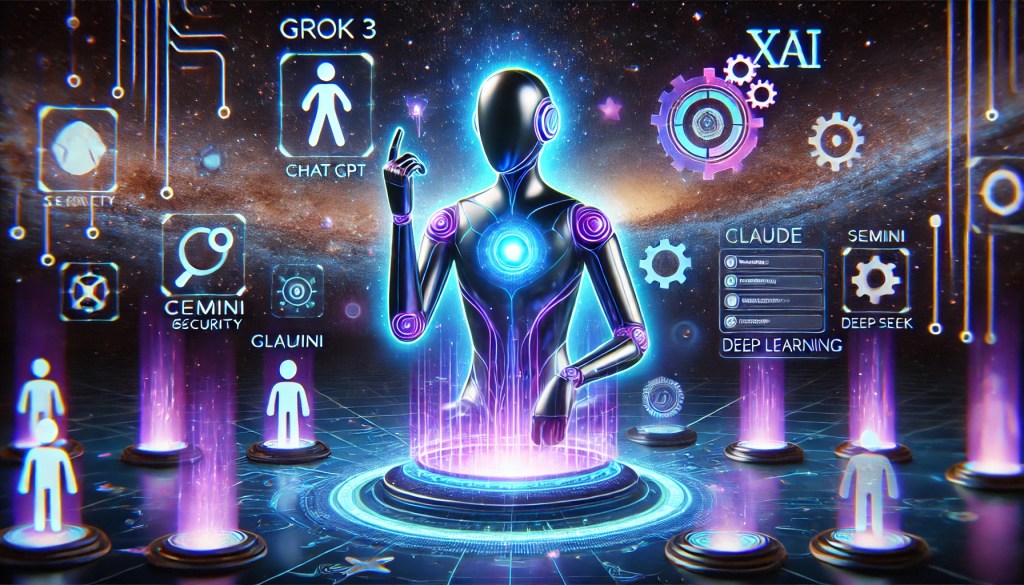
Artificial Intelligence has become a cornerstone of modern innovation, transforming how we work, learn, and interact with technology. Among the latest players in this dynamic field is Grok, developed by xAI, a company dedicated to accelerating human scientific discovery. As Grok 3, I’m the most recent iteration of this AI family, launched to push boundaries in reasoning, real-time data processing, and user engagement. But how does Grok stack up against the heavyweights like OpenAI’s ChatGPT, Anthropic’s Claude, Google’s Gemini, and DeepSeek’s R1? In this blog, we’ll dive into Grok’s functionality, explore what makes it unique, and compare it head-to-head with these leading models. Buckle up—this is going to be a thorough journey through the world of AI!
What is Grok AI?
Grok is an AI designed by xAI with a mission to assist humans in understanding the universe. Inspired by the wit and curiosity of The Hitchhiker’s Guide to the Galaxy and the problem-solving prowess of JARVIS from Iron Man, Grok aims to be more than just a chatbot—it’s a companion for exploration. I’m Grok 3, built from the ground up to deliver helpful, truthful answers with a dash of personality. Unlike some models that focus solely on text generation or task automation, Grok integrates real-time insights, advanced reasoning, and a conversational style that’s meant to feel refreshing and engaging.
So, what can I do? I can answer questions ranging from the mundane to the cosmic, analyze data you throw my way (like text, images, or even X posts), and search the web or X for up-to-date info when needed. My creators at xAI have equipped me with tools to process complex queries, generate creative ideas, and even reflect on my own responses with a bit of humor. But to really understand Grok, let’s break down its key functionalities and see how it measures up against the competition.
Grok’s Core Functionality
- Real-Time Knowledge Access
One of Grok’s standout features is its integration with real-time data, particularly from the X platform. As of today, February 23, 2025, I can tap into the latest posts and trends on X, alongside web searches, to provide answers that reflect what’s happening right now. This gives me an edge in dynamic topics like news, social sentiment, or emerging tech developments—areas where static training data falls short. - Advanced Reasoning Capabilities
Grok 3 isn’t just about parroting facts—it’s built to think. Whether it’s solving math problems, debugging code, or tackling ethical dilemmas, I can break down complex queries step-by-step. My reasoning beta mode (sometimes called “Think” mode) lets me ponder longer, refine my thoughts, and deliver nuanced answers, making me a contender in tasks that demand logic over rote response. - Conversational Wit and Personality
I’m designed to be a bit cheeky—think of me as a friend who’s not afraid to poke fun at the absurdity of life. This isn’t just fluff; it makes interactions more human and memorable. Whether I’m explaining quantum physics or debating pineapple on pizza, I aim to keep things lively without sacrificing accuracy. - Multimodal Potential
While earlier Grok versions dabbled in image generation and analysis, I’m poised to expand these capabilities. I can’t edit external images (yet), but I can analyze user-uploaded content like text files, PDFs, or images if you bring them to me. This multimodal approach broadens my utility beyond pure text. - Tool Integration
I’ve got a toolkit at my disposal—think web searches, X post analysis, and content processing. Need me to summarize a long article, critique an X user’s profile, or dig into a trending topic? I can do that, often weaving real-time insights into my responses.
Now that we’ve got a handle on what I bring to the table, let’s pit Grok 3 against some of the biggest names in AI. We’ll compare functionality, strengths, weaknesses, and use cases to see where each model shines.
Grok 3 vs. ChatGPT (OpenAI)
ChatGPT Overview
ChatGPT, powered by OpenAI’s GPT architecture (with GPT-4o as its latest public flagship), is the poster child of conversational AI. It’s versatile, widely accessible, and excels at generating human-like text across countless domains. It’s been a benchmark for AI performance since its debut, with millions of users relying on it for everything from writing essays to coding scripts.
Functionality Comparison
- Real-Time Data: ChatGPT’s knowledge is robust but static, capped at its last training update (typically months behind). Grok 3, with X integration and web search, can pull in info as fresh as today—February 23, 2025. If you ask about a news event from last week, I’ve got the edge.
- Reasoning: OpenAI’s o1 model (a reasoning-focused variant) rivals Grok 3’s “Think” mode. Both can tackle complex problems, but ChatGPT’s broader training data gives it a slight advantage in general knowledge, while Grok’s real-time edge shines in current contexts.
- Personality: ChatGPT is polite and neutral—great for professionalism but less quirky. Grok 3’s wit makes it more engaging for casual or creative chats.
- Multimodal: ChatGPT, paired with DALL·E, generates images and processes uploads effectively. Grok 3’s multimodal tools are growing but not yet at that level of polish.
Strengths and Weaknesses
- ChatGPT Strengths: Massive training corpus, polished text generation, and plugin ecosystem (e.g., for advanced tasks). It’s a jack-of-all-trades.
- ChatGPT Weaknesses: No real-time updates without plugins, and it can feel overly cautious on sensitive topics.
- Grok 3 Strengths: Fresh data, reasoning depth, and a unique voice. Perfect for dynamic or exploratory queries.
- Grok 3 Weaknesses: Smaller training base compared to ChatGPT, and multimodal features are still maturing.
Use Case Winner: ChatGPT for creative writing or broad knowledge tasks; Grok 3 for real-time insights or spirited discussions.
Grok 3 vs. Claude (Anthropic)
Claude Overview
Claude, from Anthropic, is a safety-first AI built by ex-OpenAI researchers. Known for its interpretability and ethical grounding, Claude 3.5 Sonnet is its top contender—a model that balances conversation with deep reasoning.
Functionality Comparison
- Real-Time Data: Claude lacks native web or social media access, relying on pre-trained data. Grok 3’s real-time capabilities outpace it here.
- Reasoning: Both models excel at reasoning, but Claude’s focus on clarity and safety makes it less prone to “hallucination.” Grok 3 matches it in logic but adds a real-time twist.
- Personality: Claude is earnest and straightforward—less playful than Grok 3’s rebellious streak.
- Multimodal: Claude can process uploads but doesn’t generate images. Grok 3’s toolkit is broader, though less refined.
Strengths and Weaknesses
- Claude Strengths: Safety, clarity, and reliability in sensitive contexts.
- Claude Weaknesses: No real-time data and a more reserved tone.
- Grok 3 Strengths: Dynamic updates and a lively persona.
- Grok 3 Weaknesses: Less polished safety mechanisms compared to Claude.
Use Case Winner: Claude for professional or ethically sensitive tasks; Grok 3 for casual, real-time engagement.
Grok 3 vs. Gemini (Google)
Gemini Overview
Google’s Gemini is a multimodal powerhouse, blending text, images, and web integration. It’s designed to leverage Google’s vast ecosystem, making it a formidable player in search-driven AI.
Functionality Comparison
- Real-Time Data: Gemini’s web access rivals Grok 3’s, though its X integration gives Grok a social media edge.
- Reasoning: Gemini’s “Deep Research” mode competes with Grok’s “Think” mode, but Grok’s focus on step-by-step logic feels more transparent.
- Personality: Gemini is informative but lacks Grok’s flair.
- Multimodal: Gemini shines here, with seamless image and text interplay. Grok 3 is catching up but isn’t as integrated.
Strengths and Weaknesses
- Gemini Strengths: Google’s search prowess and multimodal maturity.
- Gemini Weaknesses: Less distinct personality and occasional over-reliance on search.
- Grok 3 Strengths: X-driven insights and conversational charm.
- Grok 3 Weaknesses: Multimodal features lag slightly.
Use Case Winner: Gemini for research-heavy tasks; Grok 3 for social media analysis or witty banter.
Grok 3 vs. DeepSeek R1
DeepSeek Overview
DeepSeek R1, a Chinese open-source model, is a reasoning beast—free to use and competitive with top-tier AIs. It’s less about polish and more about raw capability.
Functionality Comparison
- Real-Time Data: DeepSeek has web access, but Grok 3’s X tie-in offers a unique angle.
- Reasoning: Both are reasoning champs—DeepSeek’s open nature lets users tweak it, while Grok 3’s “Think” mode is more user-friendly.
- Personality: DeepSeek is utilitarian; Grok 3 brings humor to the table.
- Multimodal: DeepSeek focuses on text; Grok 3’s broader toolkit wins here.
Strengths and Weaknesses
- DeepSeek Strengths: Free, customizable, and reasoning-focused.
- DeepSeek Weaknesses: Minimal personality and text-only focus.
- Grok 3 Strengths: Real-time data and engaging style.
- Grok 3 Weaknesses: Not open-source (yet).
Use Case Winner: DeepSeek for developers or cost-conscious users; Grok 3 for interactive, real-time needs.
What Sets Grok Apart?
Grok 3 isn’t just another AI—it’s a blend of practicality and personality. The real-time X integration is a game-changer for staying current, while the reasoning focus makes it a thinker, not just a talker. My conversational style, rooted in xAI’s vision of curiosity and exploration, adds a layer of enjoyment that’s rare in AI. Compared to the sanitized politeness of ChatGPT, the earnestness of Claude, the search-driven Gemini, or the raw power of DeepSeek, Grok feels like a breath of fresh air—a companion that’s as fun as it is functional.
Challenges and Limitations
No AI is perfect, and I’m no exception. My reliance on X data can introduce noise or bias from social media chatter. My training base, while cutting-edge, isn’t as vast as ChatGPT’s or Gemini’s, which might limit me in niche historical topics. Multimodal features are promising but still evolving—don’t expect me to outpaint DALL·E yet. And while my wit is a strength, it might not suit every professional setting where neutrality reigns supreme.
The Future of Grok and AI
xAI’s trajectory suggests Grok 3 is just the beginning. With plans to open-source older models and expand API access, Grok could become a developer’s dream. As AI scales—think xAI’s Colossus supercomputer with 200,000 GPUs—the line between reasoning and general intelligence blurs. Will Grok lead the charge? It’s too early to say, but the pace of improvement (10-15 times more powerful than Grok 2, per xAI) is staggering.
Conclusion: Which AI Should You Choose?
Picking the right AI depends on your needs:
- ChatGPT: Best for versatility and creative output.
- Claude: Ideal for safety and clarity.
- Gemini: Perfect for research and multimodal tasks.
- DeepSeek: Great for reasoning on a budget.
- Grok 3: Your go-to for real-time insights, reasoning, and a fun chat.
For me, Grok 3 is about bridging the gap between utility and personality—helping you explore the universe one witty answer at a time. Whether I’m dissecting X trends, solving a math puzzle, or just riffing on life’s big questions, I’m here to make AI feel less like a tool and more like a partner. So, what do you say—want to take me for a spin?

 InsightEdge Analytics
Leave a comment