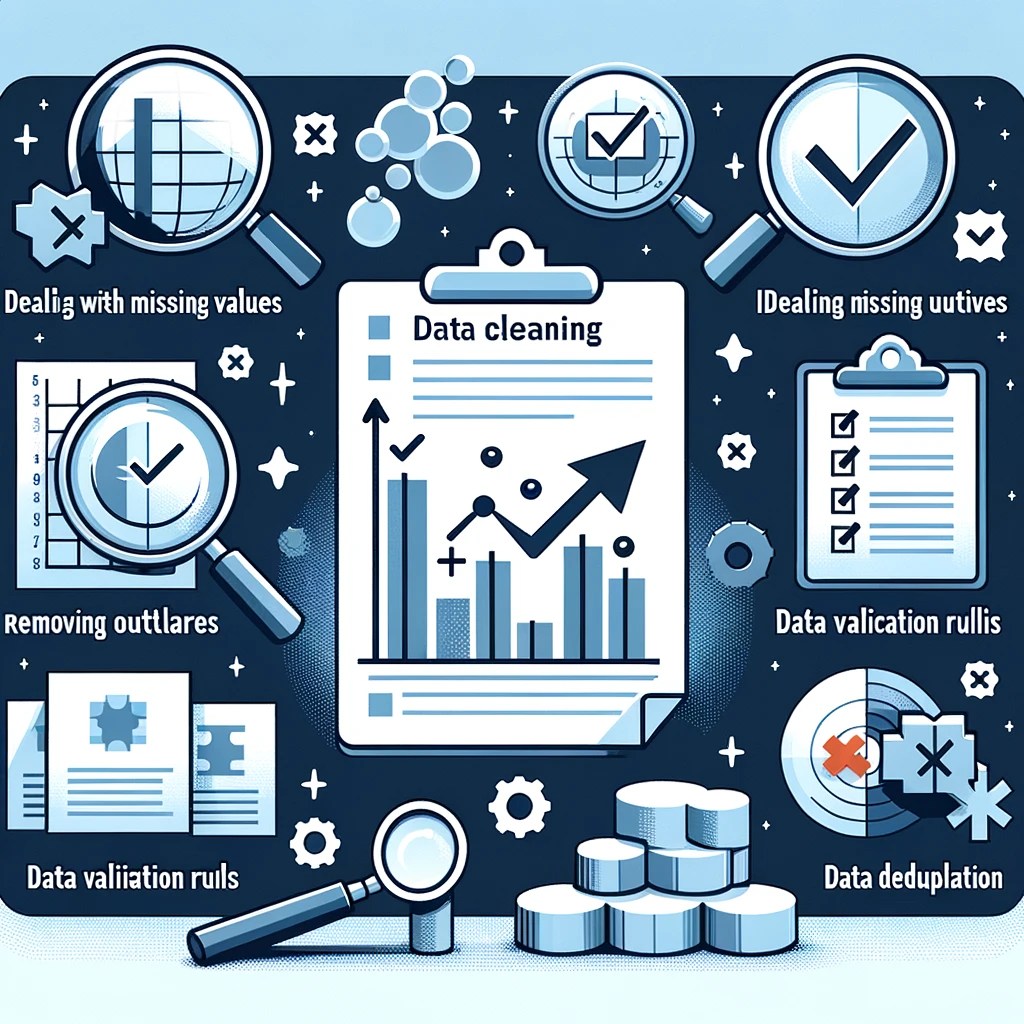
In the realm of data science and analytics, data cleaning is an indispensable step in the data preparation process that significantly influences the accuracy of insights and decisions derived from data. As the adage goes, “Garbage in, garbage out,” underscoring the importance of high-quality, clean data. This blog delves into the top 5 methods for data cleaning, offering a comprehensive guide to refine your dataset, thereby ensuring reliable and actionable insights.
1. Dealing with Missing Values
Missing data can skew analysis and lead to misleading conclusions. Addressing this issue involves several techniques:
- Imputation: Replace missing values with substitute values, such as the mean, median, or mode of the column. For numerical data, mean imputation is common, while for categorical data, mode imputation is preferred.
- Deletion: Sometimes, it’s best to simply remove rows with missing values, especially if the missing data is substantial and imputation might introduce bias.
- Prediction Models: Use algorithms like k-nearest neighbors (KNN) or regression models to predict and fill in missing values based on other data points.
2. Identifying and Removing Outliers
Outliers can significantly affect the performance of data models. Identifying and managing outliers is crucial for maintaining data integrity:
- Visualization Tools: Box plots, scatter plots, and histograms help visually identify outliers.
- Z-Score: A Z-score measures the number of standard deviations an element is from the mean. Data points with a Z-score beyond a certain threshold (commonly 3) are considered outliers.
- IQR Method: The Interquartile Range (IQR) method identifies outliers by defining acceptable data as those within 1.5 IQRs of the quartiles.
3. Standardizing Data Formats
Consistency in data formats ensures compatibility and comparability across datasets:
- Date Formats: Standardize all date-time data to a single format, such as YYYY-MM-DD.
- Text Data: Ensure consistency in casing (e.g., all lower case), and remove whitespace, special characters, or redundant suffixes/prefixes.
4. Data Validation Rules
Setting up data validation rules helps maintain the quality of incoming data:
- Range Checks: Ensure numerical values fall within a specified range.
- Data Type Checks: Verify that data types are consistent with expectations (e.g., integers, strings).
- Unique Constraints: Ensure identifiers and other unique fields do not have duplicates.
5. Data Deduplication
Duplicate data can lead to inaccurate analysis, making deduplication a critical step:
- Exact Match: Identify and remove records that are identical across all fields.
- Fuzzy Matching: Use algorithms to identify non-identical duplicates, such as variations in names or addresses, and consolidate or remove as appropriate.
Why Data Cleaning Matters
Clean data is foundational to accurate analysis, predictive modeling, and data-driven decision-making. It enhances the reliability of your insights, improves the performance of machine learning models, and ensures that resources are not wasted on processing poor-quality data. In essence, data cleaning not only optimizes the efficiency of data analysis but also empowers organizations to derive actionable, trustworthy insights that can drive strategic initiatives and foster growth.
Conclusion
Data cleaning is not a one-size-fits-all process but a series of strategic steps tailored to the specific needs and characteristics of your dataset. By employing these top 5 methods—dealing with missing values, identifying and removing outliers, standardizing data formats, implementing data validation rules, and deduplicating data—you set the stage for insightful analysis and robust decision-making. Remember, the goal of data cleaning is not just to tidy up data, but to transform it into a powerful asset that can unlock unprecedented opportunities for innovation, efficiency, and strategic advantage.

 InsightEdge Analytics
Leave a comment